The Many of Babcock
The Passage (Justin Cronin Edition)The Many of Babcock are a huge collective of viral creatures whose movements and identity are bound to Babcock. They appear as a growing force that draws creatures together across the landscape; after Babcock’s shared dream ends, Amy encounters them not as an extension of him but as individuals asking who they are. Her recognition of their lost identities makes their release from the collective possible.
Nature and Collective Pattern
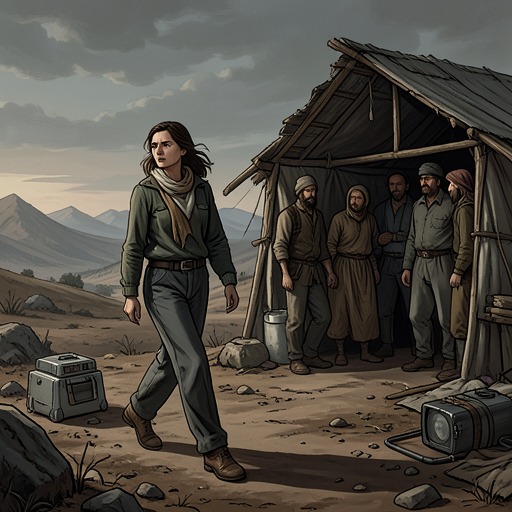
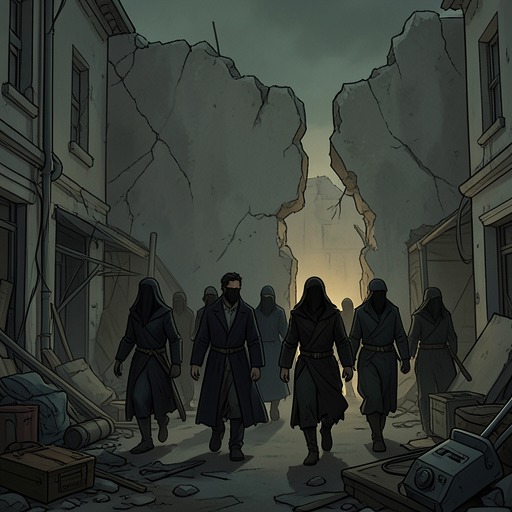
The Many are not merely a crowd of infected creatures. In the account of their trail through the snow, their tracks spread into an increasingly broad path, as though new members were joining the group from the surrounding wilderness. The party pursuing them estimates that the pod numbers in the thousands. Bloodstains along the route mark the animals the creatures have killed, while their presence ahead turns the mountain approach into a choice between a shorter route through their midst and a longer approach from the north.
Their collective identity is explained at the Haven, where Olson describes the infected creatures associated with Babcock as his own. The group’s ritual system depends on the belief that supplying four animals and two people at each new moon keeps the Many away. Olson’s explanation goes beyond Babcock controlling the creatures: he says that Babcock is them. The Many’s apparent unity is therefore presented as a relationship of shared identity, not simply an arrangement in which one creature commands others.
Encounters and Human Responses
The Many’s growing presence is legible before the group comes face to face with them. Their tracks widen as the party advances, and the marks of their movement and feeding make the danger concrete. Alicia, leading the party, rejects the direct route into the center of the pod and chooses to turn north toward the river, planning an approach from the west. The decision reflects the practical stakes of confronting a multitude whose position and numbers make a direct advance perilous.
At the Haven, the belief that Babcock’s collective can be kept away through recurring sacrifices shapes the community’s understanding of its own survival. Peter initially finds Olson’s explanation difficult to accept, but the account helps make sense of the Haven’s otherwise inexplicable existence and the residents’ guarded behavior. The Many thus exert power over human life both as a physical threat and as the force around which the Haven has organized its system of sacrifice.
Release from Babcock
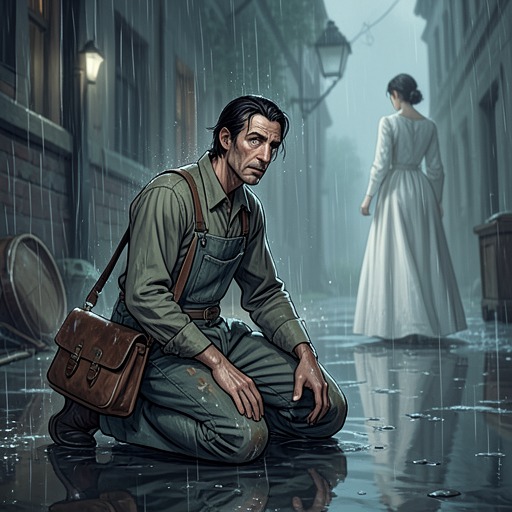
After the final confrontation, Amy leads Peter and the others past the dead creatures and into the dawn. The Many are no longer Babcock’s. They surround Amy in great numbers, but what she perceives in them is not the old shared dream: it has left an emptiness, and in its place is a fierce question of individual identity. The change is more than a shift in allegiance. The collective bond that defined them has ended, leaving its members without the stories by which they could recognize themselves.
Amy understands that she can answer this need. Recalling Lacey’s image of her as a ship, she recognizes herself as the bearer of the Many’s souls and stories, kept until she could return to each creature what belonged to it: knowledge of who it had been. She calls them to her, and they come from the trees, fields, and other hidden places. Moving among them, touching them, she tells them what they long to know. The scene recasts the Many from a mass defined by Babcock into separate beings addressed and remembered by Amy.
Narrative Significance
The Many’s arc turns on a contrast between imposed unity and recovered personhood. Under Babcock, their collective identity is expressed through a shared dream and the claim that he is them; once that dream ends, their first need is to ask who they are. Amy’s response does not simply defeat or disperse them. She restores the histories that make individual identity possible, allowing the end of Babcock’s collective to become a passage toward renewed selfhood.
Their transformation also reframes the story’s imagery of home and belonging. Earlier, the Many’s tracks and expanding numbers make them seem like an approaching force that must be avoided or placated. At dawn, they instead gather around Amy, who can carry and return what they have lost. The same multitude that had been organized around Babcock’s identity becomes a community of distinct beings through memory and recognition.